Shop by Category

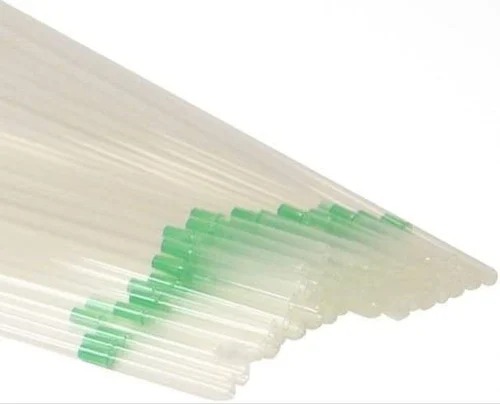

Sold By: Anand Surgical Industries
Length and Diameter: The sheath is usually long enough to reach the desired location within the reproductive tract. The length and diameter may vary depending on the intended species and the specific application.
Tip: The tip of the sheath is typically rounded or tapered for easy insertion and to minimize discomfort. It may also have a smooth surface to reduce the risk of injury.
Lubrication: Some sheaths come pre-lubricated to facilitate smooth insertion and minimize friction. This helps ensure the comfort of the female during the insemination process.
Markings: Some sheaths may have markings along their length to indicate the depth of insertion or to provide guidance during the insemination procedure.
Connector: At the opposite end of the sheath from the tip, there is usually a connector or attachment point. This allows for the attachment of a syringe or other delivery device to introduce the semen into the sheath.
Material: Artificial insemination sheaths are typically made from medical-grade materials that are biocompatible and safe for use in the reproductive tract. Silicone and polyurethane are commonly used due to their flexibility, durability, and ease of cleaning.
It's important to note that the specific design and features of artificial insemination sheaths can vary depending on the intended application, species, and manufacturer. Additionally, there may be specialized sheaths designed for specific animals or human fertility procedures.
Categories: Artificial Insemination Sheaths
Length and Diameter: The sheath is usually long enough to reach the desired location within the reproductive tract. The length and diameter may vary depending on the intended species and the specific application.
Tip: The tip of the sheath is typically rounded or tapered for easy insertion and to minimize discomfort. It may also have a smooth surface to reduce the risk of injury.
Lubrication: Some sheaths come pre-lubricated to facilitate smooth insertion and minimize friction. This helps ensure the comfort of the female during the insemination process.
Markings: Some sheaths may have markings along their length to indicate the depth of insertion or to provide guidance during the insemination procedure.
Connector: At the opposite end of the sheath from the tip, there is usually a connector or attachment point. This allows for the attachment of a syringe or other delivery device to introduce the semen into the sheath.
Material: Artificial insemination sheaths are typically made from medical-grade materials that are biocompatible and safe for use in the reproductive tract. Silicone and polyurethane are commonly used due to their flexibility, durability, and ease of cleaning.
It's important to note that the specific design and features of artificial insemination sheaths can vary depending on the intended application, species, and manufacturer. Additionally, there may be specialized sheaths designed for specific animals or human fertility procedures.


Basic Information
| Nature of Business | Exporter and Manufacturer |
| Additional Business |
|
| Company CEO | Saksham Anand |
| Total Number of Employees | 11 to 25 People |
| Year of Establishment | 1983 |
| Legal Status of Firm | Partnership Firm |
| Annual Turnover | Upto Rs. 50 Lakh |
Statutory Profile
| Import Export Code (IEC) | ABEFA***** |
| Banker | UCO Bank |
| GST No. | 03ABEFA8530C1Z1 |
Packaging/Payment and Shipment Details
| Payment Mode |
|
| Shipment Mode | By Road |
₹220.00
₹200.00
₹250.00